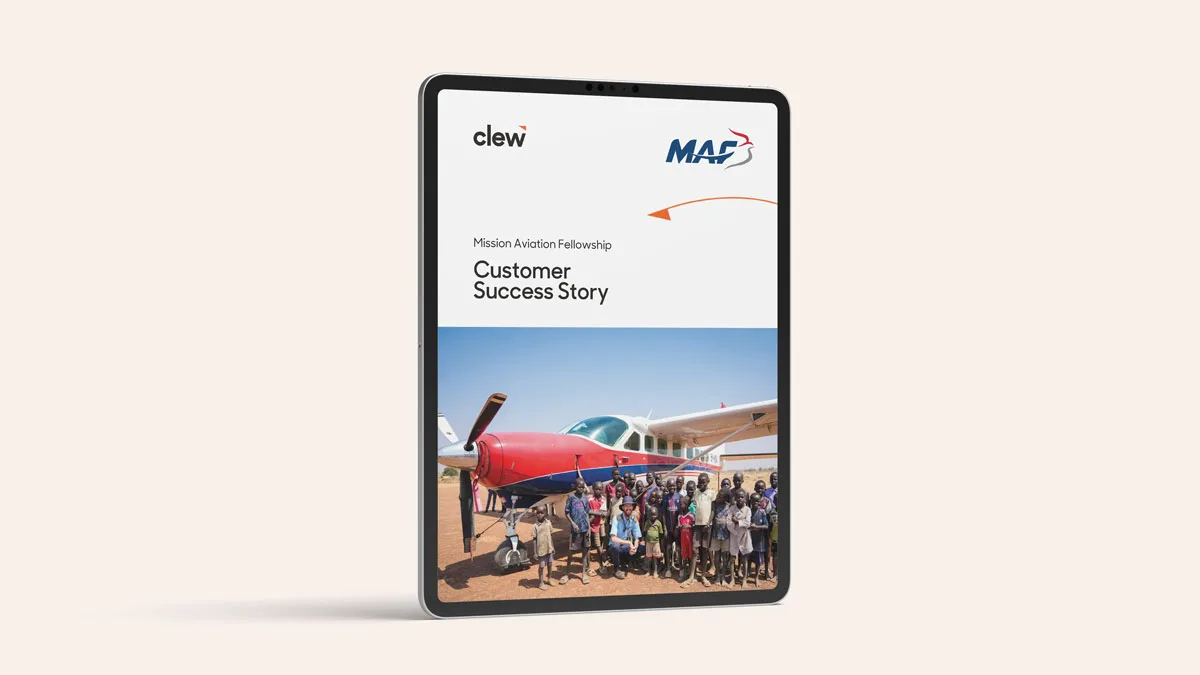
When Mission Aviation Fellowship reviewed 27 systems to replace its ageing safety and security platform, it was close to signing with another supplier before Clew entered the process. What followed was a full rebuild of how safety, risk and assurance work together across 59 aircraft, 747 people and operations in 12 of the world’s most challenging locations. This case study tells the story of how MAF International turned more than two decades of operational memory into one connected aviation safety system.
A safety culture that needed better tools
MAF International already had a strong safety culture. Pilots, engineers and managers reported issues openly, including self reports when something had not gone as well as it should have. The problem was never discipline or care. It was that the systems supporting safety, risk and assurance no longer matched the complexity of the organisation’s environment. Incident data sat in an ageing legacy platform. Risk records were scattered across spreadsheets, Word documents and local files. Terminology varied. Ownership varied. The organisation could record, but acting on what it recorded was harder than it should have been.
Why Mission Aviation Fellowship chose Clew
The selection process was extensive. MAF International reviewed specialist aviation tools, broader safety platforms and general risk systems before choosing Clew. The deciding factors were practical: a cleaner interface, configurability that could be managed in house, and a platform suited to environments where low bandwidth and remote connectivity are everyday realities. Email reporting alongside digital inputs mattered too, because in aviation the quality of a reporting culture depends on how easy it is for crew to raise an issue honestly. Confidentiality through role based access protected sensitive information while still giving leaders the visibility they needed.
Turning two decades of incident history into insight
The most ambitious part of the implementation was data migration. Clew extracted and migrated 17,648 incident reports dating back to 2005 into one connected database, attachments included. For an aviation risk management programme, that history is operational gold. When an event occurs today, MAF International can ask whether something similar has happened before, across time, location and aircraft type. Two examples in the case study bring this to life: how runway incursion data shaped engagement with local communities at remote landing strips, and how patterns in staff security incidents informed targeted training. The case study explains the methods, not only the outcomes.
From 872 risk lines to 22 organisational risks
When MAF International’s new risk lead took responsibility for the process, there were 872 risk lines across the organisation. Using the Bow Tie methodology in Clew, that landscape was rebuilt into 22 organisational risks, with nine cascaded to programmes. The case study explains how that consolidation supports the Golden Thread in practice: objectives, risks, controls, assurance and reporting connected as a single operating picture rather than three separate conversations.
What the new aviation safety system delivered
The impact extends beyond a system swap. Incidents now link to the corrective and preventive actions that follow them. Local teams retain ownership of local issues while central leadership gains the cross programme visibility it needs. Assurance work can test whether controls are actually working, and reporting becomes connected to operational reality rather than a compliance exercise. The case study walks through how this changed the conversation at every level of the organisation.
Who This Case Study Is For
Heads of Safety, Heads of Risk and Heads of Assurance in aviation, transport and field operations will recognise the patterns and find practical lessons in how MAF International approached selection, migration and rollout. Operations leaders and CIOs evaluating an aviation safety system will see how a connected platform supports both frontline reporting and executive oversight. Risk professionals will benefit from the detail on moving from registers to active risk management.
Read how Mission Aviation Fellowship rebuilt its aviation risk management capability, preserved 17,648 historical incidents and reduced 872 risk lines to 22. Download the case study to read the full story.