Centralised Risk Register
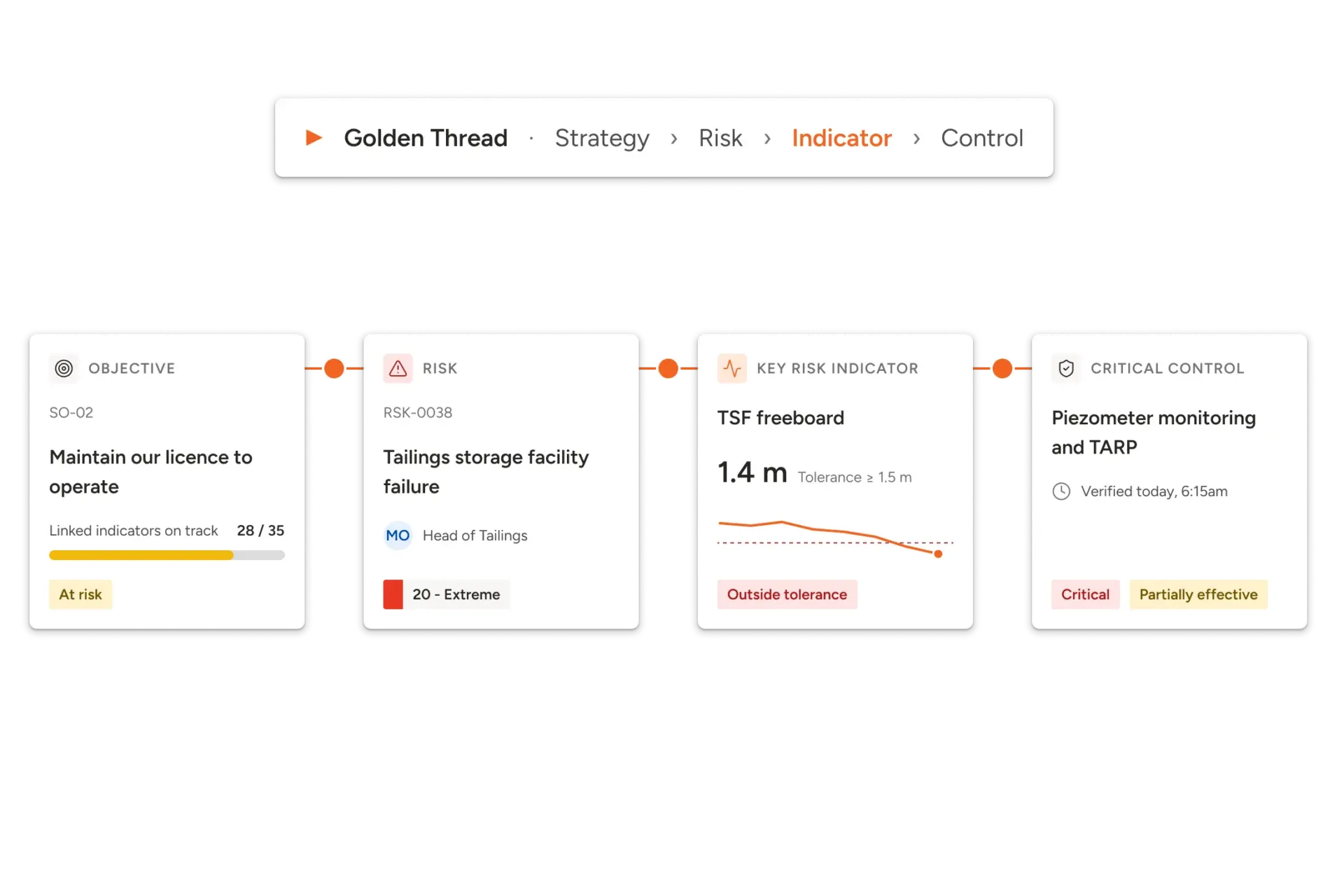
Link KRIs to Business Objectives
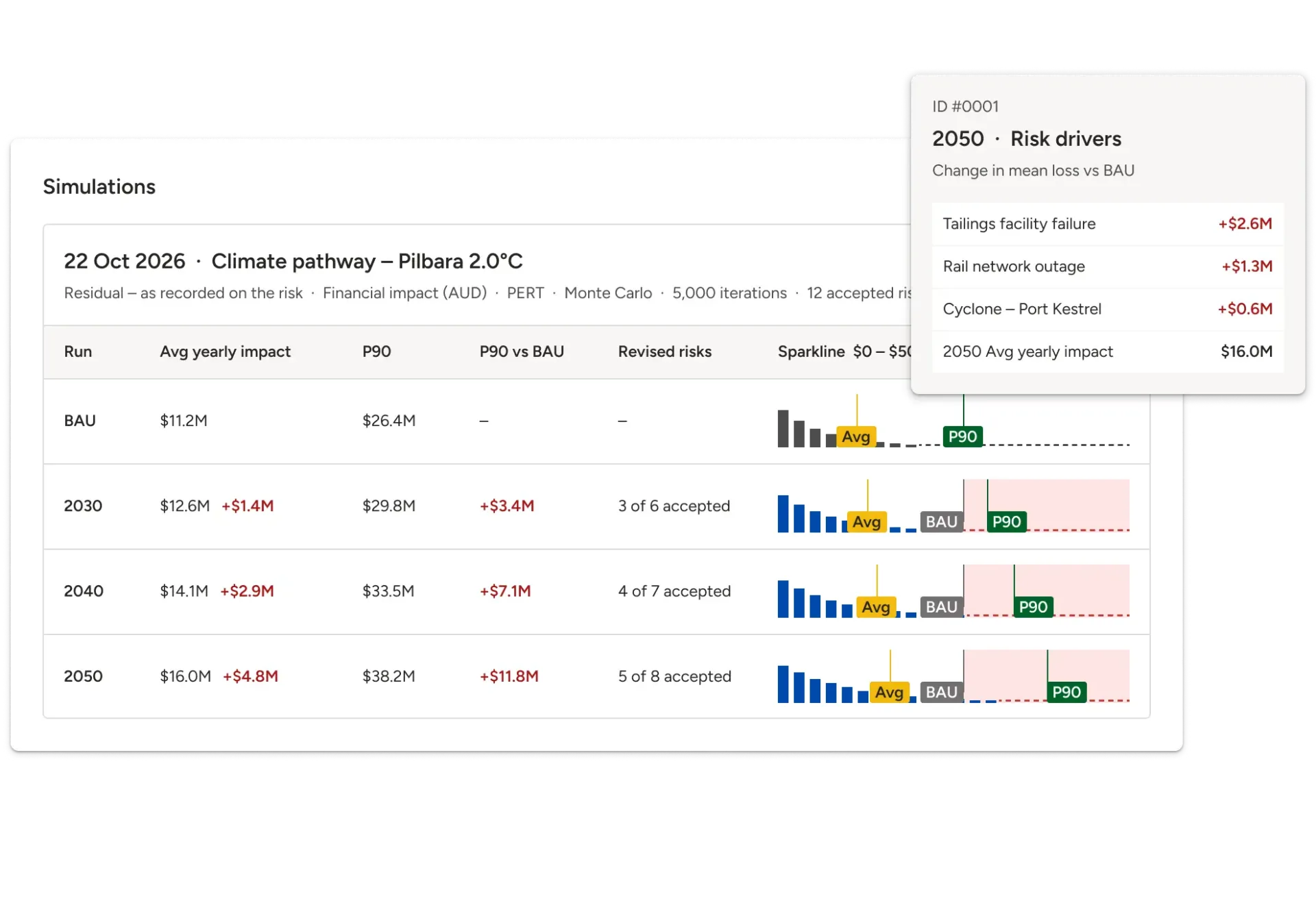
Monte Carlo Analysis
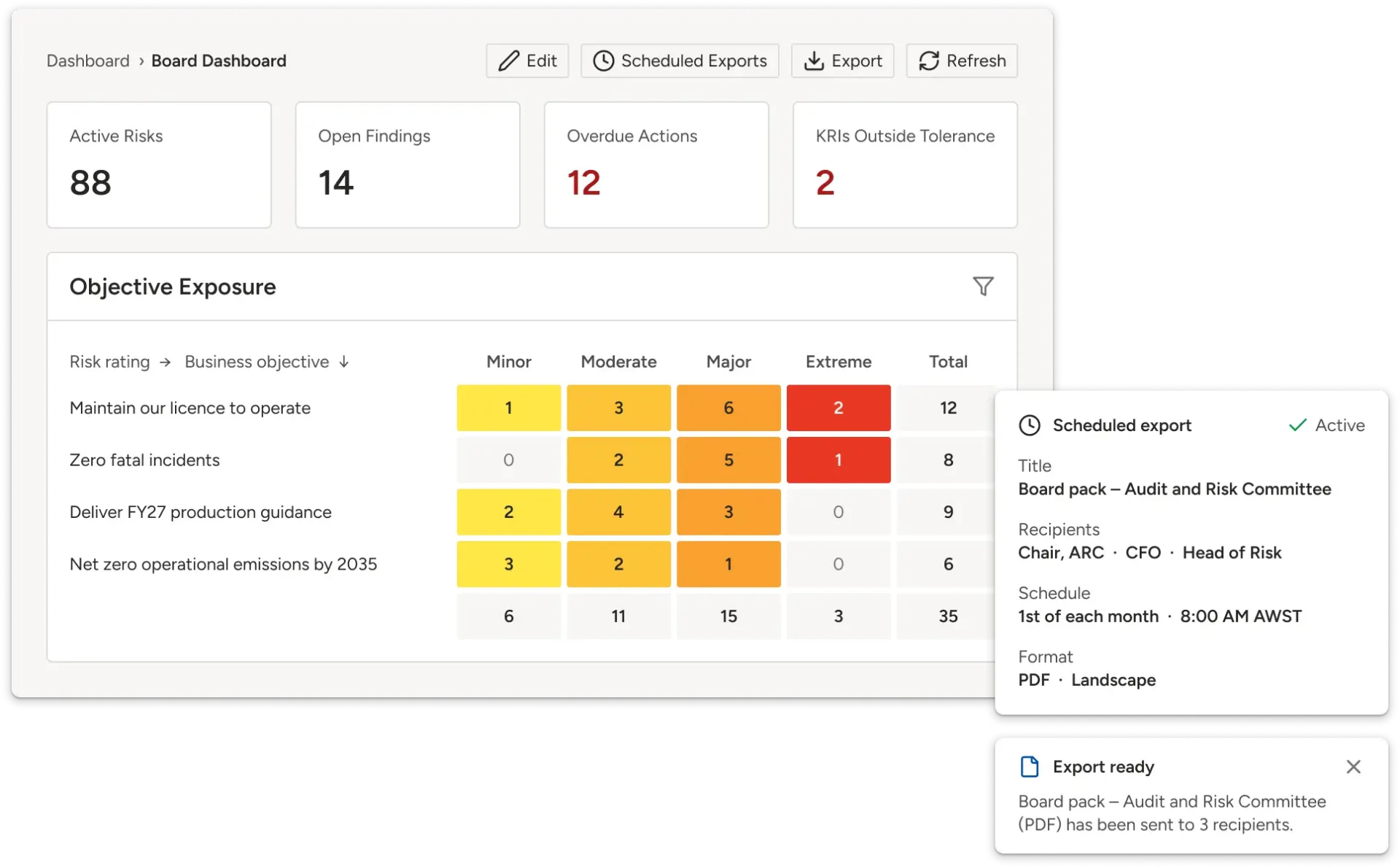
Real-Time Reporting
Scenario and Trend Analysis
Integrated Action Tracking
We Know That One Size Doesn’t Fit All
Every element of risk in one connected system
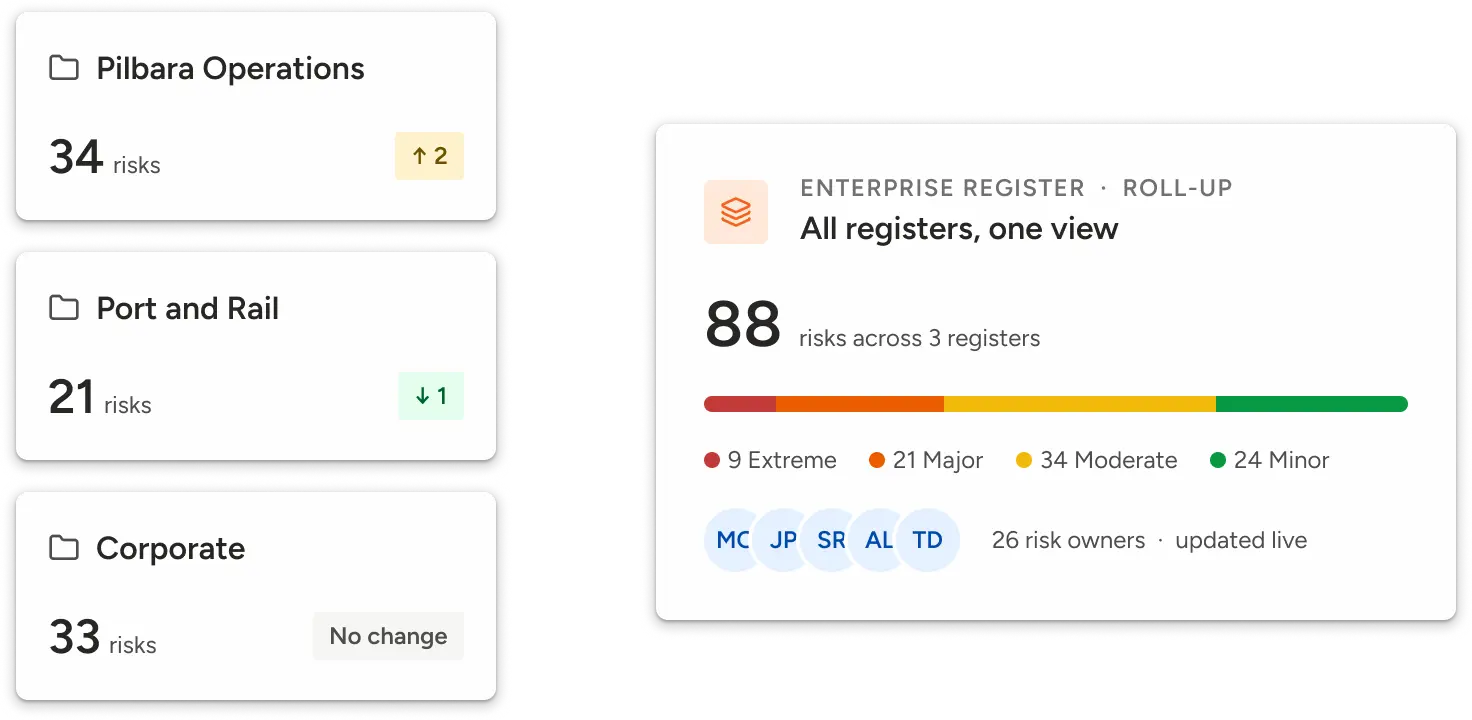
Centralised risk register
Link KRIs to business objectives
Monte Carlo analysis
Real-time reporting
Scenario and trend analysis
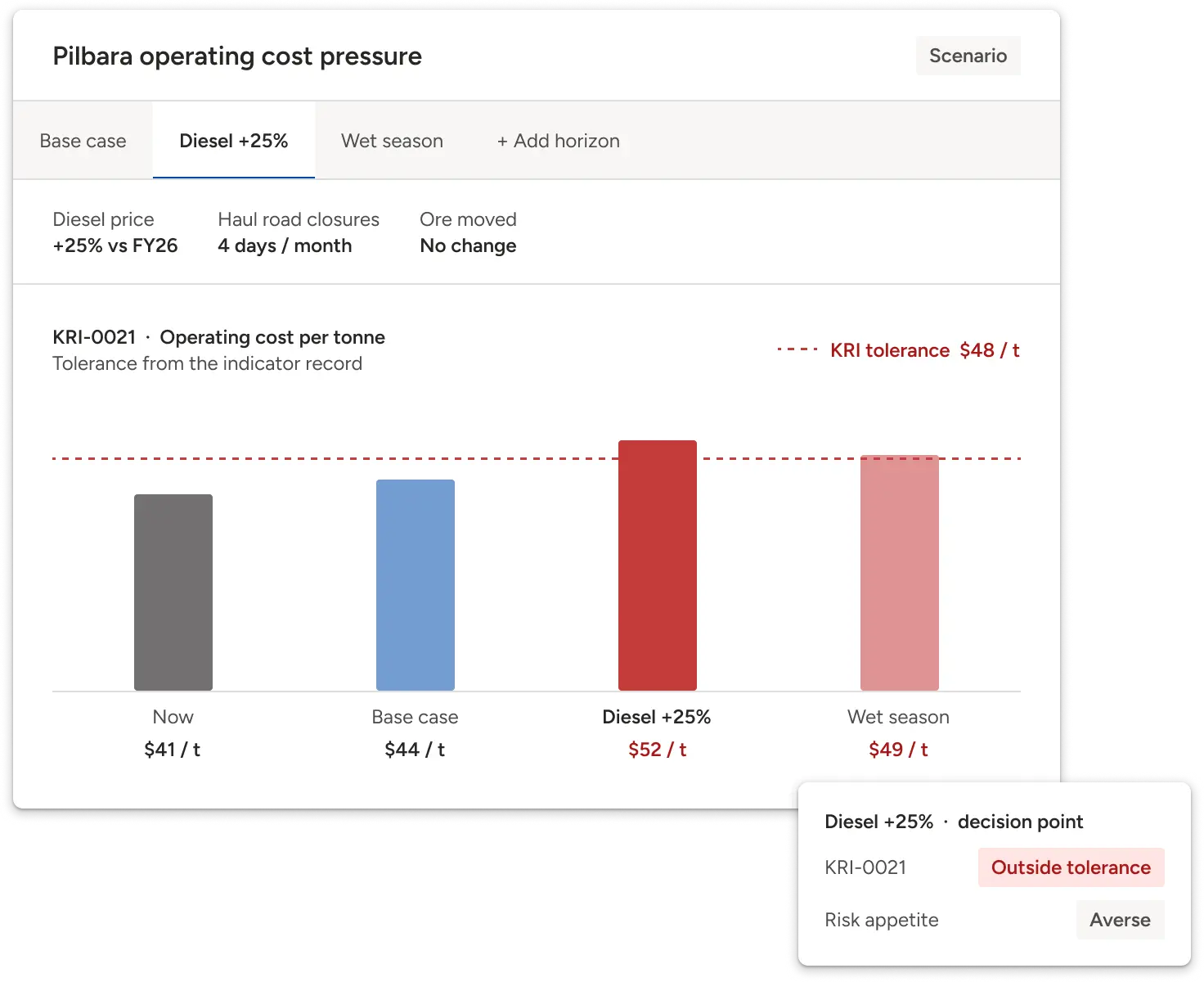
Integrated action tracking
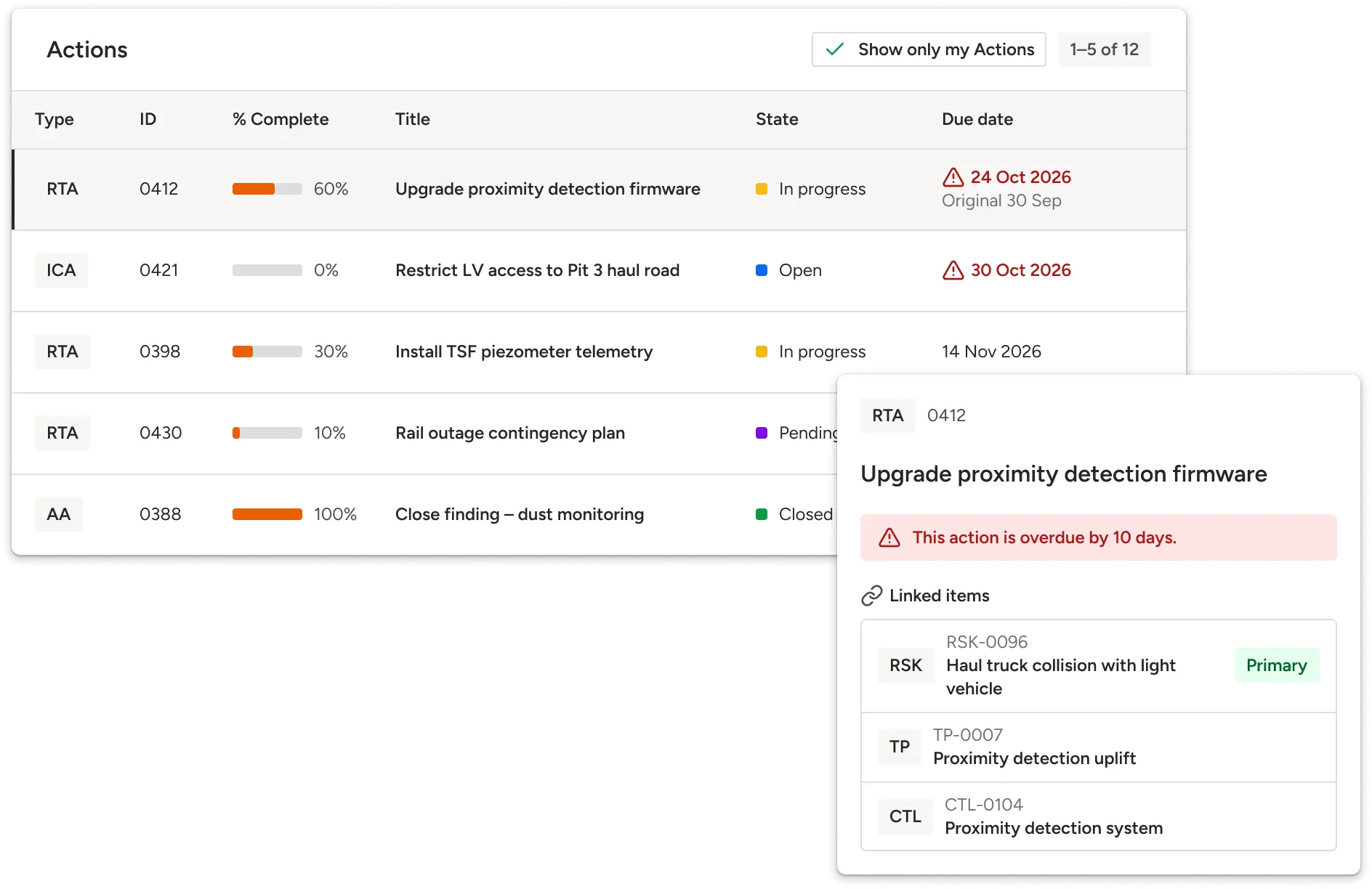
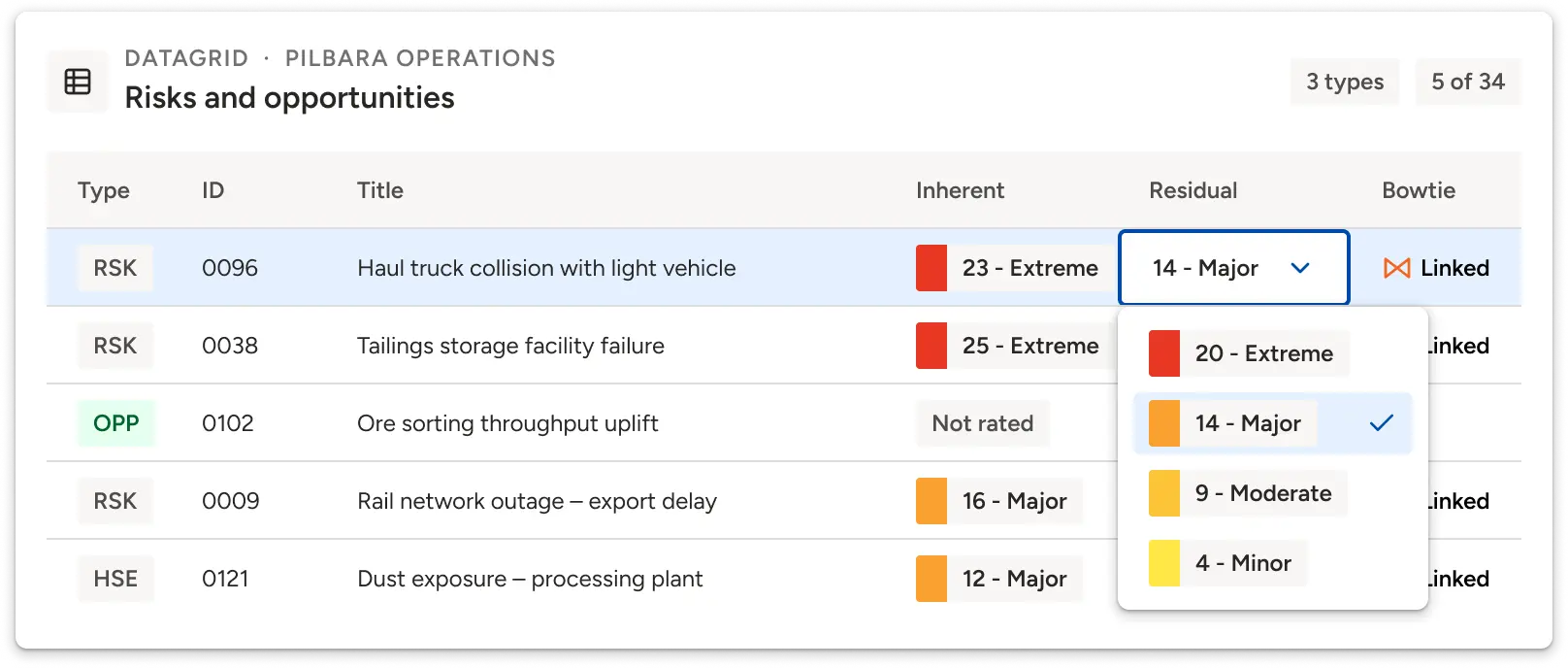
Risk Bowtie and Datagrid
Simple risk or Risk Bowtie
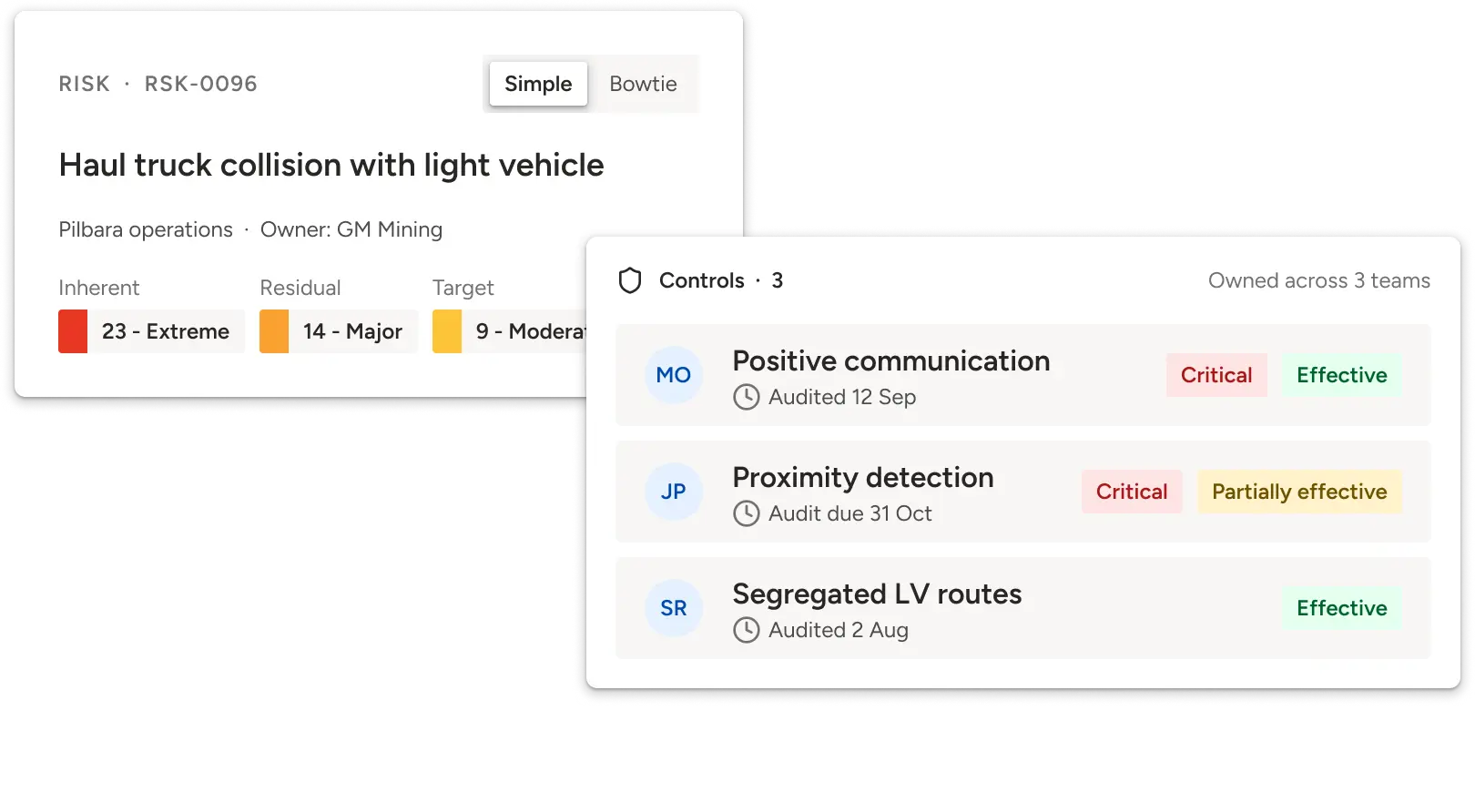
Drag-and-drop Bowtie
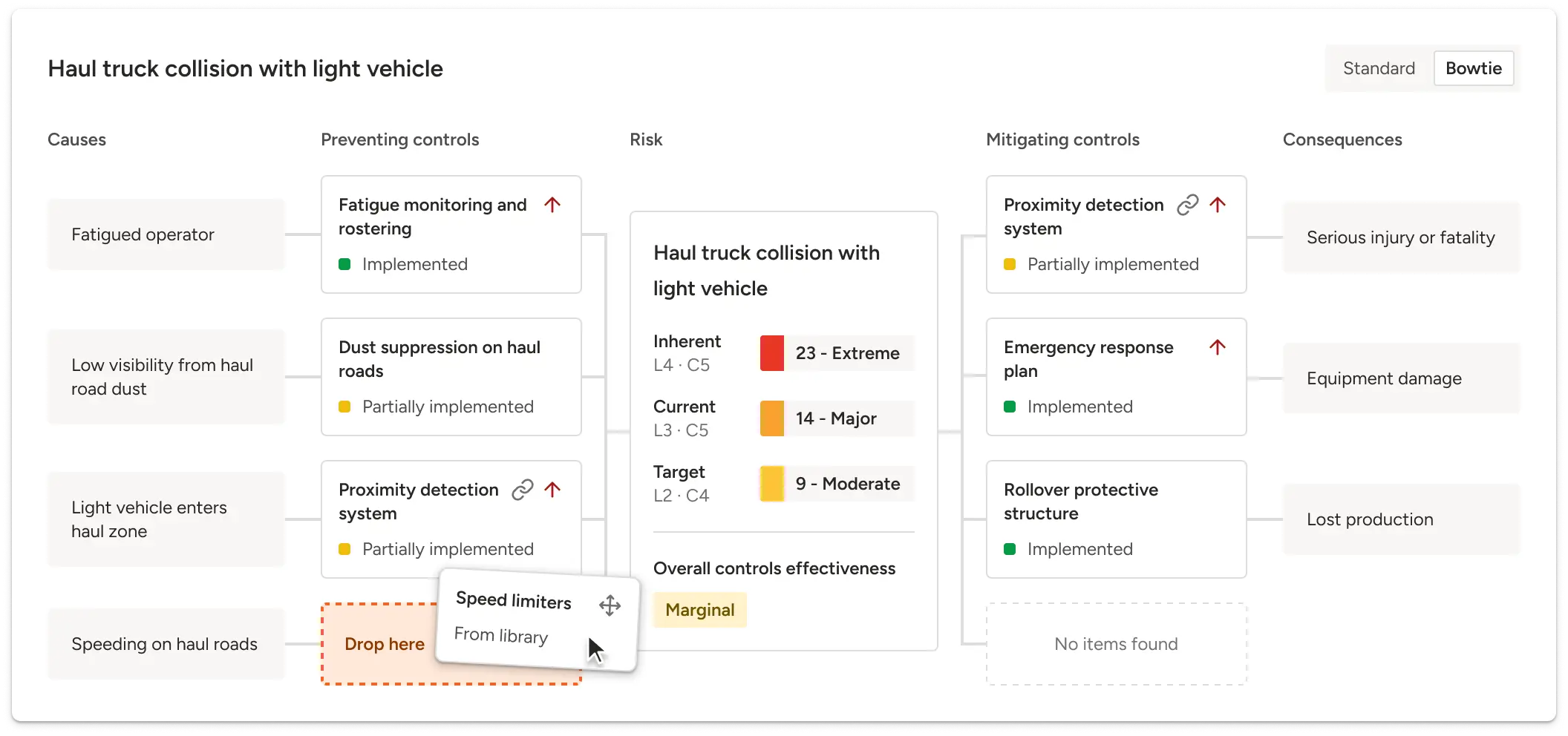
Quick entry with Datagrid
Industries that trust Clew
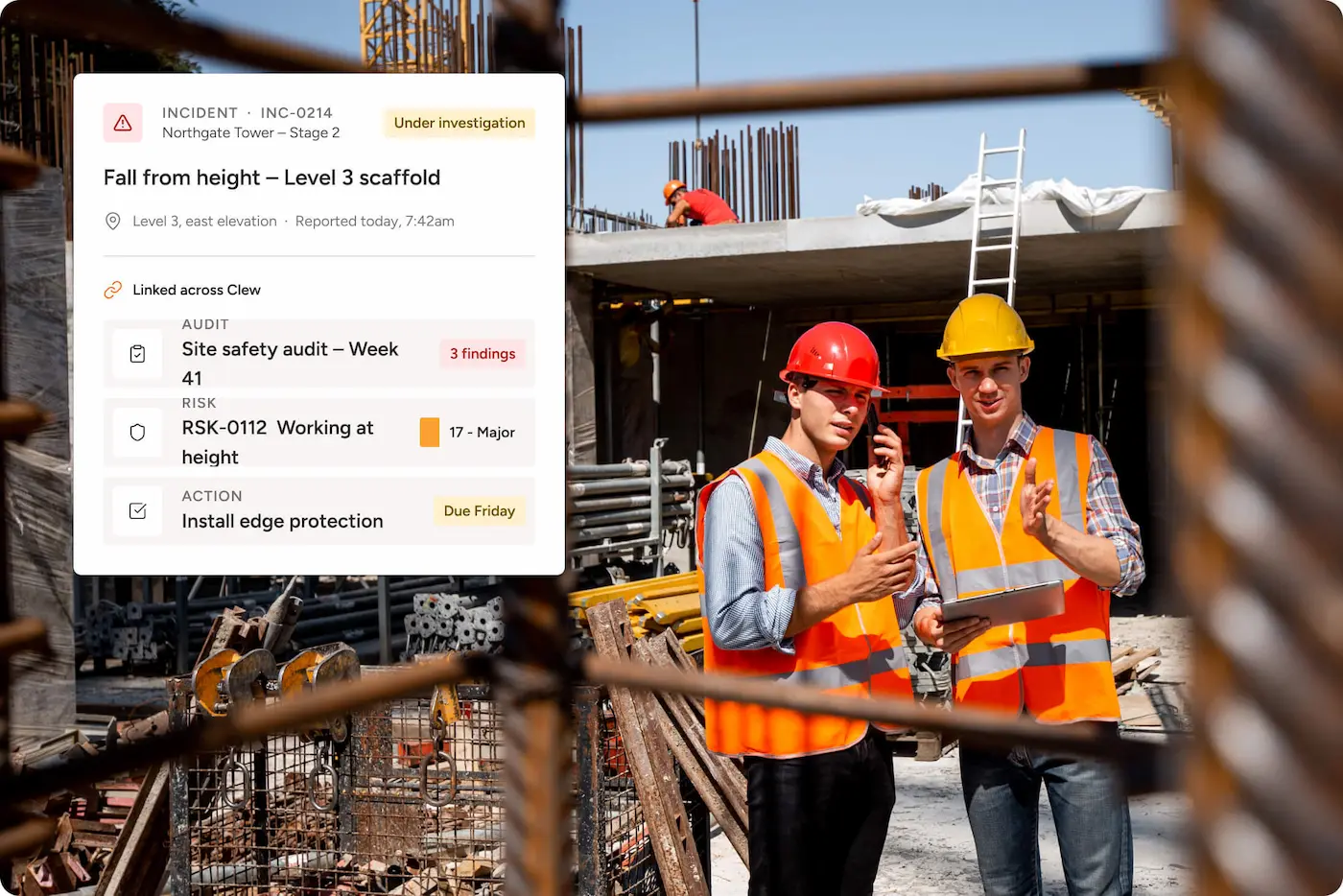
Construction
Government & Public Sector

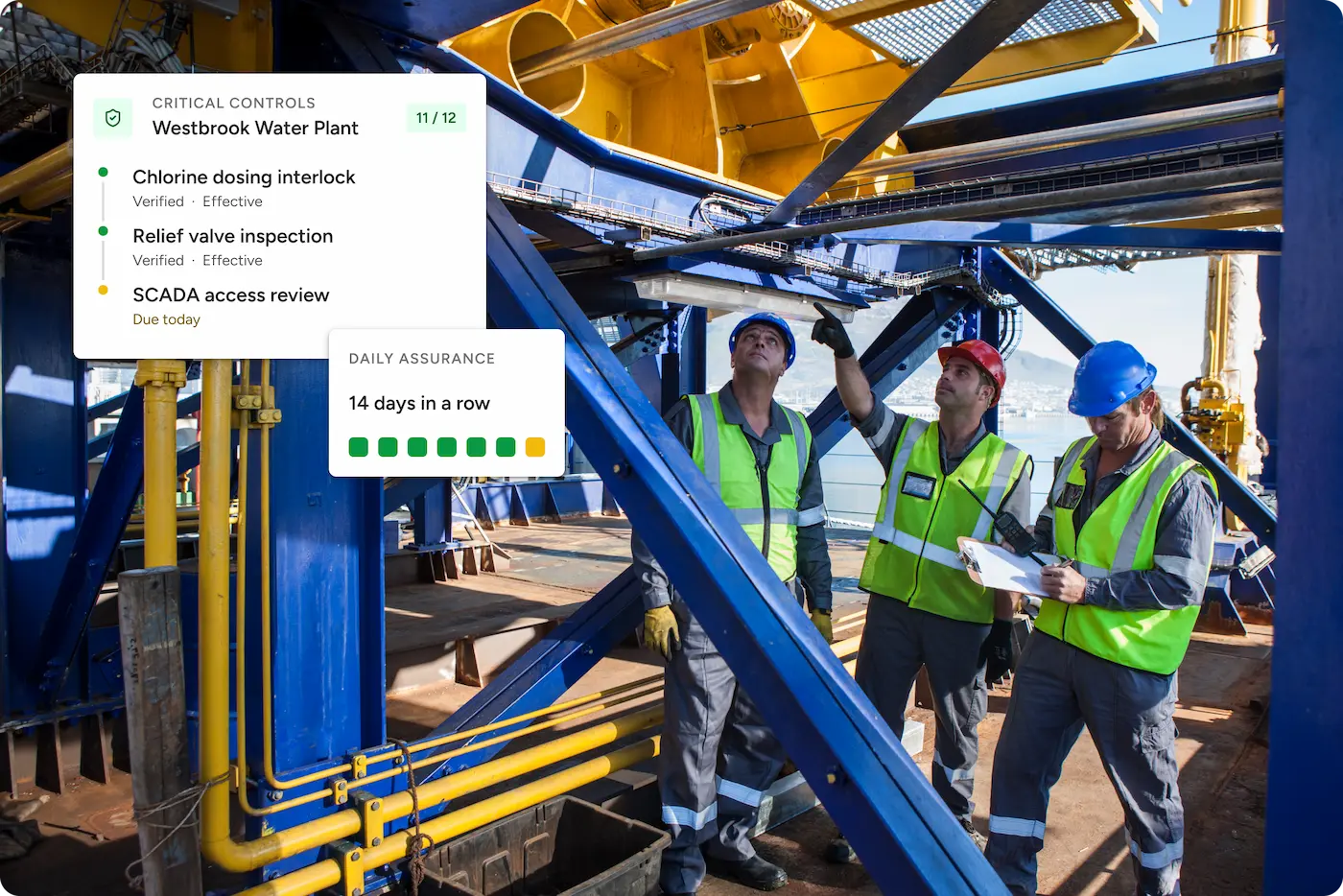
Infrastructure and utilities
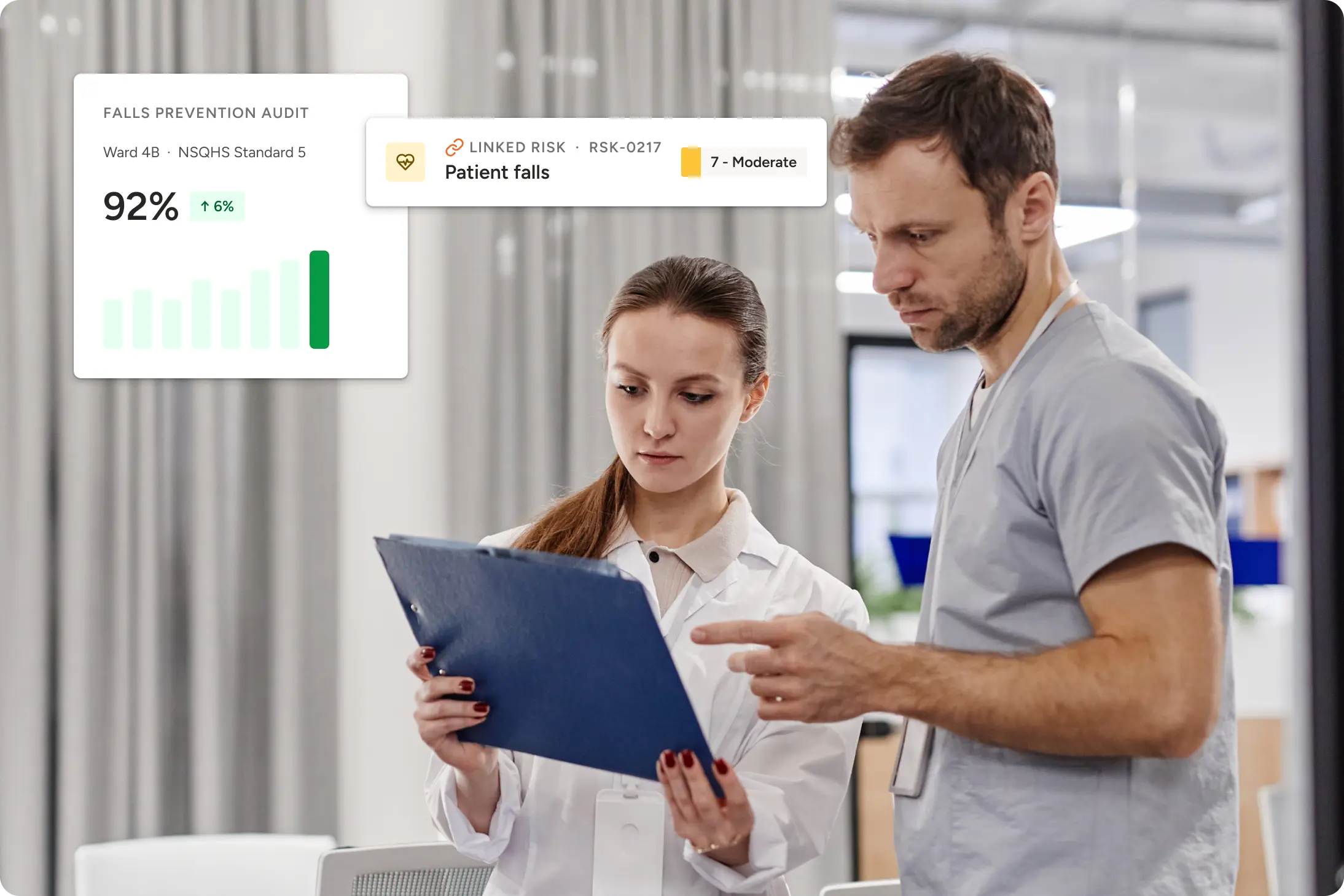
Healthcare
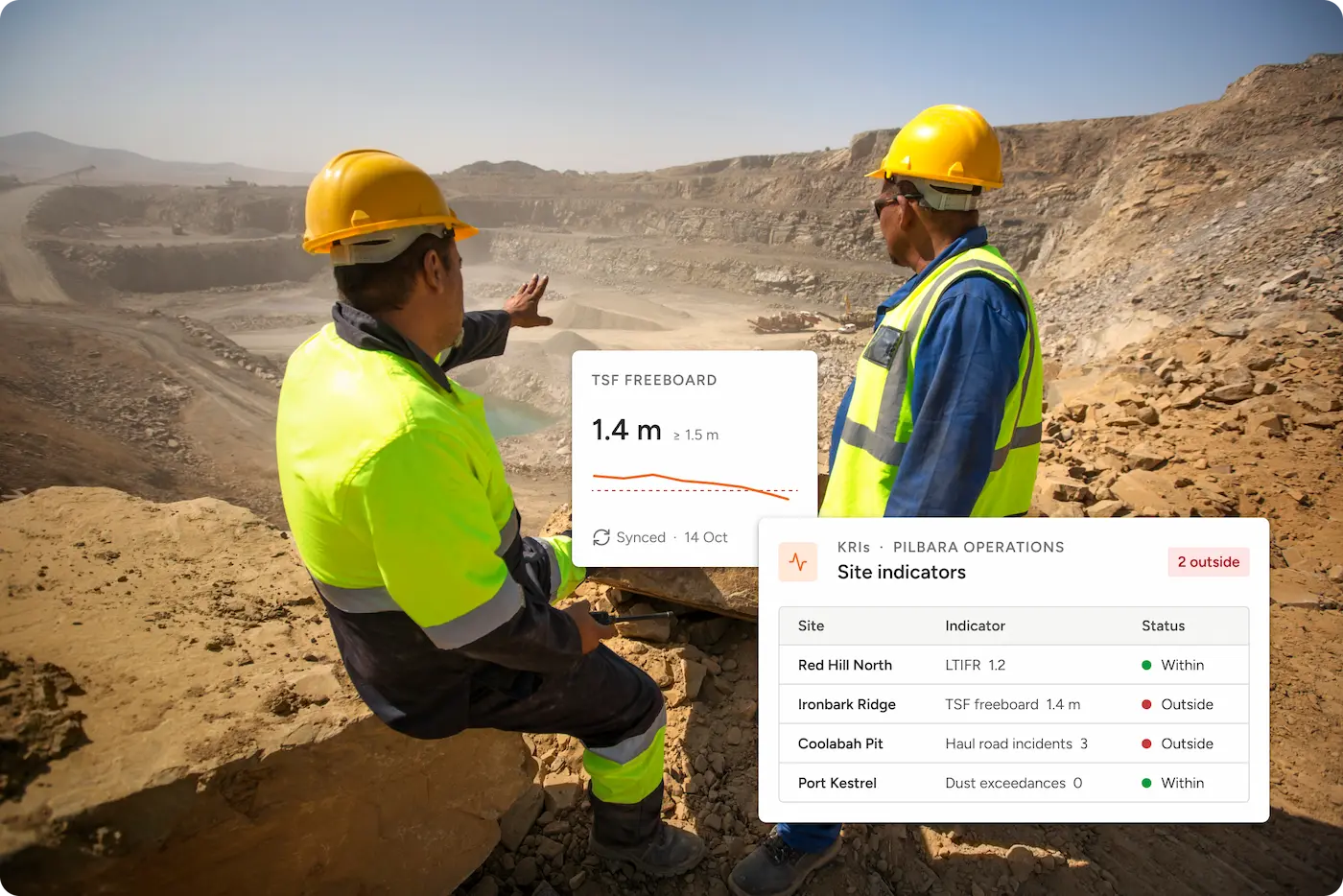
Mining
Professional Services

Transportation

Additional Capabilities
What to look for in risk management software
| Capability | Why it matters |  |
|---|---|---|
| Centralised risk register | One source of truth for ownership, likelihood, and impact across the enterprise. | One source of truth for ownership, likelihood, and impact across the enterprise. |
| KRIs linked to objectives | Shows how each risk affects strategy and outcomes. | The Golden Thread, built on ISO 31000 |
| Quantitative risk analysis | Quantifies uncertainty so you can understand risk ranges and predict outcomes. | Monte Carlo modelling on your most material risks |
| Controls and Bowtie analysis | Maps causes, controls, and consequences around each risk. | Drag-and-drop Bowtie, with controls that have owners, criticality, effectiveness ratings, and audits |
| Scenario and trend analysis | Helps you anticipate change before it becomes a problem. | Model risk scenarios and test controls |
| Real-time reporting | Gives executives and boards a current view of exposure. | Audit-ready, board-level reports in a few clicks |
| Integrated action tracking | Keeps every mitigation accountable and visible. | Actions linked to their parent risk treatment plan |
| Fast implementation | Value arrives sooner when setup does not drag on. | Typically weeks, not months, with direct import from Excel |
| Enterprise-grade security | Risk data is sensitive and needs strong access controls. | ISO 27001 certified, SSO, MFA, and role-based access control |
We know that one
size does not fit all
Your Hub for Risk and Assurance Resources
Guides, articles and expert insights from Clew's risk and assurance team, covering everything from emerging trends in risk management to best practice in compliance, audit and safety. Practical resources built to help you manage risk with confidence.
Your Risk Questions, Answered
What is risk management software?
Risk management software helps organisations identify, assess, and manage risks that could affect their objectives. Clew replaces spreadsheets and siloed systems with one unified platform that connects risk, assurance, and performance.
How does Clew link risk management to business performance?
Clew connects risk indicators, assurance activities, and performance targets to show how each risk could influence strategic objectives. This Golden Thread helps leaders see where risks may disrupt performance—and act before they do.
How long does implementation take?
Clew is quick to implement—typically in weeks, not months—using pre-configured templates and best-practice frameworks built for the mid-market.
What implementation support is available?
From day one, you’ll be guided by Clew’s implementation and Customer Success team, with options for configuration support, training, and access to the Clew Academy for ongoing development.
Why risk management software implementations fail in large enterprises and how to avoid common pitfalls
Large enterprise implementations fail when technology is expected to fix structural problems.
Common causes include unclear accountability, inconsistent risk definitions across divisions, over customised workflows, and attempting a full enterprise rollout before proving value. Many programs also focus on data capture rather than decision improvement.
Avoid this by starting with a clearly defined outcome. What decisions need to be better? What visibility is missing today?
Agree core definitions early. Establish ownership. Configure only what is necessary to support the operating model. Prove value in one division, then scale with discipline. Sustainable adoption comes from clarity, not complexity.
What are the top risk management software vendors in Gartner?
Industry analysts categorise vendors based on capability areas such as Integrated Risk Management and Governance, Risk and Compliance platforms. However, there is no universal “top” solution for every organisation.
The right platform depends on your maturity, regulatory environment, integration needs, and reporting expectations at executive and board level.
When reviewing vendors, focus less on feature volume and more on alignment to your operating model. Can the platform connect objectives, risks, controls, assurance and outcomes in a way that supports real decisions? That question matters more than any ranking.
What is the best risk management software for small businesses?
For smaller organisations, simplicity and speed matter most.
The best solution is one that can be implemented quickly, provides immediate visibility, and does not require a large consulting program to maintain. It should allow clear ownership of risks and actions, generate meaningful reports without manual manipulation, and scale as the organisation grows.
Risk software should remove spreadsheet dependency and improve confidence in reporting. If it adds administrative burden, it is the wrong fit.
Contact us or request a demo to see how simple Clew is and how it can help your business.
What are the differences between ERM and GRC software?
Enterprise Risk Management focuses on understanding uncertainty at a strategic level. It links risks to objectives and supports leadership trade offs.
Governance, Risk and Compliance platforms typically emphasise regulatory obligations, policy management, control frameworks, and audit traceability.
In practice, these disciplines should not operate in isolation. Effective organisations connect strategic risk views with compliance and assurance execution. When objectives, risks, controls and assurance activities sit in separate systems, clarity is lost.
The strongest platforms unify these elements into one connected view that supports both strategic oversight and operational accountability.
How to implement risk management software step by step
-
Define the decision problem. Clarify what leaders cannot currently see or trust.
-
Establish your risk framework. Agree terminology, rating scales, and ownership structures.
-
Prioritise scope. Start with one business unit or risk domain.
-
Configure workflows. Align assessments, controls, actions, and reporting to your operating model.
-
Clean and migrate data. Focus on quality over volume.
-
Pilot with real users. Refine based on feedback.
-
Deliver executive reporting early. Show improved clarity quickly.
-
Expand progressively. Add additional teams, modules, and integrations as maturity grows.
-
Embed governance and cadence. Ensure the platform supports continuous review, not annual compliance cycles.
Successful implementation is not about system go live. It is about sustained decision confidence.